AI Rescue Video Channel Ideas: 3 Formats Going Viral
· 9 min read

If you're hunting for ai rescue video channel ideas, three specific formats are carrying the ai rescue tiktok trend right now: mini rescue dioramas, firefighter POV channels, and animal rescue compilations. Each one has its own look, its own tools, and its own risk of being mistaken for real news — which matters more here than in almost any other faceless niche.
This isn't a generic "AI video ideas" list. It's a breakdown of what's actually working, the exact tools creators are using to build it, and the labelling steps that keep a channel visible instead of getting it throttled or fact-checked off a platform.
Why are AI rescue and disaster clips going viral right now?
Since roughly May 2026, TikTok, Reels and Shorts feeds have filled up with AI-generated rescue and disaster clips because the format is cheap to make and instantly readable. A giant hand saving a tiny figure, or a firefighter pulling a puppy from smoke, needs no setup — the danger and the save are both visible in the first frame, so there's nothing for a viewer to scroll past while waiting for the point.
The tools behind the trend have also matured fast. revid.ai alone hosts 91 videos in its Rescue category and 32 in its Firefighter category, meaning there's now a visible library of what works and what gets copied.
What is the mini rescue diorama format?
Mini rescue is a tabletop-style AI video where tiny figures or penguins sit inside a miniature danger scene — flood, fire, snowstorm, volcano lava, a giant wave, or cracking ice — and a giant, realistic-looking hand reaches in to save them. Fuzana's Mini Rescue tool offers six danger variants and two rescue subjects as ready-made templates.
The appeal is built into the format itself: nobody actually builds the diorama. The hand, the miniature scene and the danger are all AI-generated, which is the whole selling point rather than something hidden from the viewer. That's part of why this variant carries the lowest fact-checking risk of the three — the scale is obviously fake, so almost nobody mistakes it for a real event.
Because each danger variant is really the same template with a new disaster dropped in, a mini rescue channel can run on a simple rotation: flood this week, lava next, cracking ice after that. It's one of the easier faceless rescue channel ideas to keep repeatable without burning out on new concepts every day.
What is an AI firefighter POV channel?
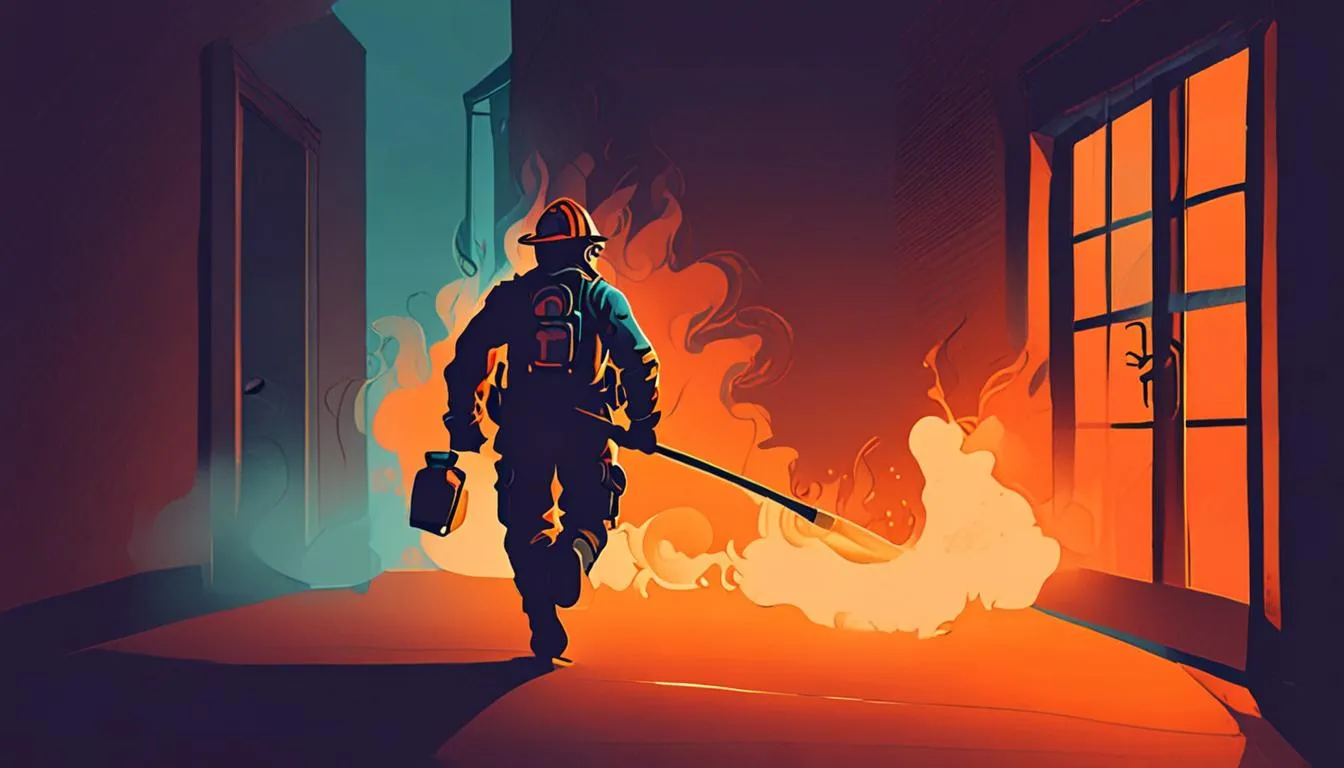
An AI firefighter POV channel shows a first-person run into a burning building, framed like bodycam or helmet-cam footage, ending in a rescue. The channel FireFighting POV is built entirely around this idea and states plainly that "all scenes are AI-generated for entertainment and storytelling," posting regular Shorts under tags like #FireRescue and #AIVideo.
This is the format with the most dramatic pacing, because POV framing mimics real emergency footage almost exactly — which is also why it's the format most likely to get mistaken for something it isn't. On revid.ai's firefighter category page, the top-performing example, "Fire Truck on Its Way," was built from a Suno-generated song prompt using the Nintendo style preset, which shows how far creators are already stretching the format with music-first production rather than dialogue-first.
Do AI animal rescue videos actually work as a channel?
Yes — animal rescue is the most emotionally reliable of the three formats, but it's also the one that has already caused real fact-checking problems. A firefighter or civilian pulling a dog, cat or wild animal from fire or floodwater delivers a clear emotional payoff, which is exactly why it travels so far on Facebook and Reels as well as TikTok and Shorts.
It's also the format BOOM's fact-check team found circulating as real footage from the January 2025 Los Angeles wildfires, with tell-tale AI errors including animals missing limbs and lighting that didn't match a supposedly fire-lit scene. Lead Stories separately traced a February 2026 viral clip of a firefighter rescuing a mother dog and her puppies to at least four near-identical AI versions built from the same prompt, each with the same scripted dialogue and the same nonsensical window and grate architecture.
Format comparison at a glance
The fact-check risk column below is this article's own editorial read based on the cases sourced above, not a rating published by any platform or fact-checking body.
| Format | What's on screen | Why it holds attention | Best platform fit | Fact-check risk (our assessment) |
|---|---|---|---|---|
| Mini rescue diorama | Tiny figures or penguins, giant hand, one of six danger scenes | Scale contrast is instantly readable | TikTok, Shorts | Low — reads as obviously stylised |
| Firefighter POV | First-person run into fire, bodycam-style framing | Pacing mimics real emergency footage | Shorts, Reels | High — closest to real footage |
| Animal rescue compilation | Firefighter or civilian saving an animal from danger | Strong emotional payoff, highly shareable | Facebook, Shorts, Reels | Highest — already mistaken for real wildfire footage |
Which tools and style presets are creators using for rescue videos?
Most of what's circulating right now is being built on revid.ai, an AI disaster video generator used with its Prompt to Video, Cinematic Videos and AI Music Video Generator tools, in styles that range from Realism and Pixar to Anime and Lego. That range matters because the same rescue script can look like a Pixar short one day and photorealistic bodycam footage the next, depending purely on the style preset chosen.
The trade-off with stitching several separate tools together is that the script, voice, visuals and music all have to be matched up by hand. Clip Viral builds the whole video — script researched from real sources, voiceover, captions, visuals and background music — from a single topic, in any of 18 visual styles from realistic footage to cartoon, anime, 3D or a cinematic short-film look. For a creator testing whether mini rescue, firefighter POV or animal rescue fits their audience best, that means one topic can be tried across several looks in the time it would take to set up one tool chain manually.
If the plan is a rotating series rather than a one-off, a Series on Clip Viral keeps producing new videos on a schedule chosen from every four hours up to every two days, which suits the repeat-the-template structure that mini rescue and firefighter POV both rely on. For broader format ideas beyond rescue content, the faceless YouTube channel ideas guide and the AI micro-drama channel ideas piece cover other repeatable niches built the same way.
Why do AI rescue clips keep getting fact-checked as real disasters?
They get fact-checked because the format is designed to look like real emergency footage, and the errors that give it away — missing limbs, mismatched lighting, impossible architecture — aren't obvious at a glance on a phone screen. Several of the exact rescue and firefighter clips described above have already been formally fact-checked as fake by BOOM and Lead Stories.
What's notable is that the YouTube accounts behind those fact-checked clips did carry YouTube's own "Altered or synthetic content" disclaimer, stating the sound or visuals were significantly edited or digitally generated. The label didn't stop the clips from being shared as real — but it shows that platforms already expect creators in this niche to disclose, and that disclosure is treated as the baseline, not an optional extra.
How to label AI generated rescue videos on YouTube, TikTok and Instagram
Each platform handles disclosure differently, and getting it wrong risks either an automatic label you didn't choose or a policy strike you didn't expect. Here's what applies on each one as of 2026.
YouTube. The "Altered or synthetic content" toggle lives in YouTube Studio and is required specifically when a video could be mistaken for real footage of a real person, place or event. According to AIR Media-Tech's breakdown of the policy, the label appears beneath the player on long-form video and as an overlay on Shorts for photorealistic content. Writing a script with AI, generating a thumbnail with AI, or using a generic text-to-speech voice does not trigger this requirement — only realistic synthetic video or audio does. Since YouTube's May 27, 2026 update, the platform actively scans for undisclosed photorealistic AI content and applies the label automatically, even if the creator never toggled it. For how this interacts with monetisation specifically, see the YouTube inauthentic content policy guide.
TikTok. The disclosure flow is manual and mobile-only. Pixo's compliance guide explains that creators tap "More options" after recording or uploading, then turn on the "AI-generated content" setting. TikTok can also auto-detect AI content through C2PA Content Credentials embedded by many AI video tools, and once that auto-label is applied, the creator can't remove it. Importantly, TikTok states that turning on the disclosure "won't affect the distribution of your video as long as it doesn't violate our Community Guidelines" — so any reach penalty in this niche comes from the policy breach, not from the honesty of labelling. If monetisation is the goal, can AI generated videos be monetized on TikTok walks through what disclosure does and doesn't change for payouts.
Instagram, Facebook and Threads. Meta requires its own AI disclosure tool for organic posts containing photorealistic video or realistic-sounding audio that was digitally created or altered. Postora's 2026 labelling roundup notes the viewer-facing label is now called "AI info," renamed from "Made with AI" in July 2024, and that Meta may apply penalties for non-disclosure. As of August 31, 2026, Instagram also renamed its "AI creator" label to "AI-generated profile," required for any profile that features an AI-generated person rather than a human presenter. Labelled profiles keep normal reach; unlabelled ones that Instagram identifies as AI-generated may see recommendation limits — the full requirements are in Instagram's AI-generated profile label guide.
Do EU AI Act disclosure rules apply to a rescue channel?
Yes, if the channel has EU viewers and is run commercially. Article 50 of the EU AI Act requires anyone deploying AI professionally — including small businesses and freelance creators monetising their content — to disclose deepfake-style content to EU audiences, a requirement that took effect on August 2, 2026.
The penalties attached to this are higher than anything a platform applies on its own: fines up to €15 million or 3% of global annual turnover for breaches, per Postora's summary of the 2026 rules. For a solo creator this mostly means one habit — disclose by default, every time, rather than deciding case by case whether a particular clip looks "real enough" to need it.
Should you build a faceless rescue channel right now?
Mini rescue is the easiest of the three to run without ever tripping a fact-check, since the scale makes it obviously stylised. Firefighter POV and animal rescue compilations carry real audience numbers but also real disclosure obligations, because both formats have already been mistaken for genuine emergency footage. None of that is a reason to avoid the niche — it's a reason to label consistently and pick a format that matches how much disclosure friction you're willing to manage.
The bigger opportunity underneath all three formats is the same one driving every faceless niche right now: the creators who will earn from content over the next few years are the ones who publish consistently, and AI is what makes that consistency possible without a studio, a camera, or an editor. A rescue channel built on rotating danger variants or a firefighter-POV premise lives or dies on whether new episodes keep showing up on schedule — missing a week kills momentum fast in a trend-driven niche like this one.
Clip Viral handles the parts that usually cause that gap: it researches the script from real sources, writes and voices it, cuts the captions, builds the visuals in one of 18 styles, and ships a finished vertical video with a thumbnail, title, description, tags and hashtags already attached. A Series then keeps producing new episodes on a schedule from every four hours to every two days, so the rotation that mini rescue and firefighter formats depend on keeps running without someone manually opening a tool chain each time. This is about as cheap as starting a channel has ever gotten — 300 free credits are available once an email address is confirmed, no card required, which is enough to build and label the first few videos and see which rescue format actually fits an audience before spending anything. Start free at Clip Viral and test a format before committing a schedule to it.
Frequently asked questions
What is the AI mini rescue trend on TikTok?
It's a format where tiny figures or penguins sit in a miniature danger scene — flood, fire, snowstorm, lava, a giant wave or cracking ice — and a giant, realistic-looking hand reaches in to save them. Fuzana's Mini Rescue tool offers six danger variants as ready-made templates, and the whole scene, hand included, is AI-generated rather than physically built.
Do I need to label AI rescue videos as AI-generated?
Yes, on every major platform if the footage could be mistaken for a real event. YouTube requires its "Altered or synthetic content" toggle for photorealistic video, TikTok has a manual "AI-generated content" setting under More options, and Instagram and Facebook require their "AI info" label for realistic video or audio.
Can AI-generated rescue videos be monetized?
Disclosure itself does not block monetisation on TikTok or YouTube — TikTok states that enabling its AI label "won't affect the distribution of your video" as long as it doesn't break Community Guidelines. Problems arise when creators skip disclosure and the content is later identified as misleading, which is treated as a policy violation rather than a labelling issue.
What tools do creators use for AI firefighter POV videos?
Many of the firefighter POV clips circulating now are built on revid.ai, which hosts 32 videos in its Firefighter category using tools like Prompt to Video and its AI Music Video Generator, in styles from Realism to Nintendo-style presets. Clip Viral builds the full video in one step — script, voiceover, captions, visuals and music — across 18 visual styles, including realistic and cartoon looks.
Why do AI rescue videos keep getting fact-checked as real news?
Because the format is built to resemble real emergency or bodycam footage, and the giveaway errors — animals missing limbs, mismatched fire lighting, impossible window architecture — aren't obvious on a quick scroll. BOOM and Lead Stories have both traced viral "real" rescue clips back to AI-generated originals in 2025 and 2026.
Does the EU AI Act affect a faceless rescue channel?
Yes, if the channel is run commercially and reaches EU audiences. Article 50 of the EU AI Act, in force from August 2, 2026, requires disclosure of deepfake-style content and carries fines up to €15 million or 3% of global annual turnover for non-compliance.
Let the videos make themselves
Clip Viral researches, writes, voices and renders short-form videos on a schedule you set.
Start freeSources
- Mini Rescue AI Video Generator — Free Preview, Tiny Rescues
- Rescue AI Videos | Create Rescue Videos with AI
- Firefighter AI Videos | Create Firefighter Videos with AI
- FireFighting POV - YouTube
- LA Fires: AI Videos Of Firefighters Rescuing Animals Viral As Real Footage
- Fact Check: Fake Video Of Firefighter Rescuing A Mother Dog And Pups From Burning Building Is One Of Many AI Versions
- What is YouTube's AI content disclosure policy?
- How to Comply with TikTok's AI Label Rule When You Use AI Video Tools (2026)
- When you have to label AI-generated content: Instagram, TikTok, YouTube, LinkedIn and the EU in 2026